How to Travel with Your Pet Without the Stress: A Practical Packing and Planning Guide
You've booked the trip, packed your bags, and mapped the route — but there's one more traveler to prepare for: your pet. Whether you're loading your golden retriever into the back seat for a weekend cabin trip or navigating airport security with a carrier-bound cat, traveling with animals requires a different kind of planning. The good news? With the right preparation, it can be genuinely enjoyable for both of you.
This guide covers everything from pre-trip vet visits to packing the perfect bag, managing anxiety on the road, and knowing what to do when things don't go as planned. Let's make your next trip with your pet one you'll actually want to repeat.
Start With a Vet Visit — Even If Your Pet Seems Fine
Before any trip longer than a few hours, schedule a quick check-in with your veterinarian. This is especially important if you're flying, crossing state lines, or traveling internationally. Here's what to cover:
Health certificate: Many airlines and some states require a certificate of veterinary inspection (CVI) issued within 10 days of travel. Don't assume — check the requirements for your destination.
Vaccinations: Make sure your pet is up to date, particularly on rabies. Some destinations require proof of vaccination.
Motion sickness: If your pet has a history of car sickness, ask about anti-nausea medications. Cerenia (maropitant) is commonly prescribed for dogs and works well for longer drives.
Anxiety: Some pets become extremely stressed during travel. Your vet can recommend calming supplements, pheromone sprays, or prescription medications if needed.
Also use this visit to confirm your pet's microchip information is current. If your dog or cat gets separated from you in an unfamiliar place, an up-to-date microchip is your best chance of a reunion.
Build the Ultimate Pet Travel Kit
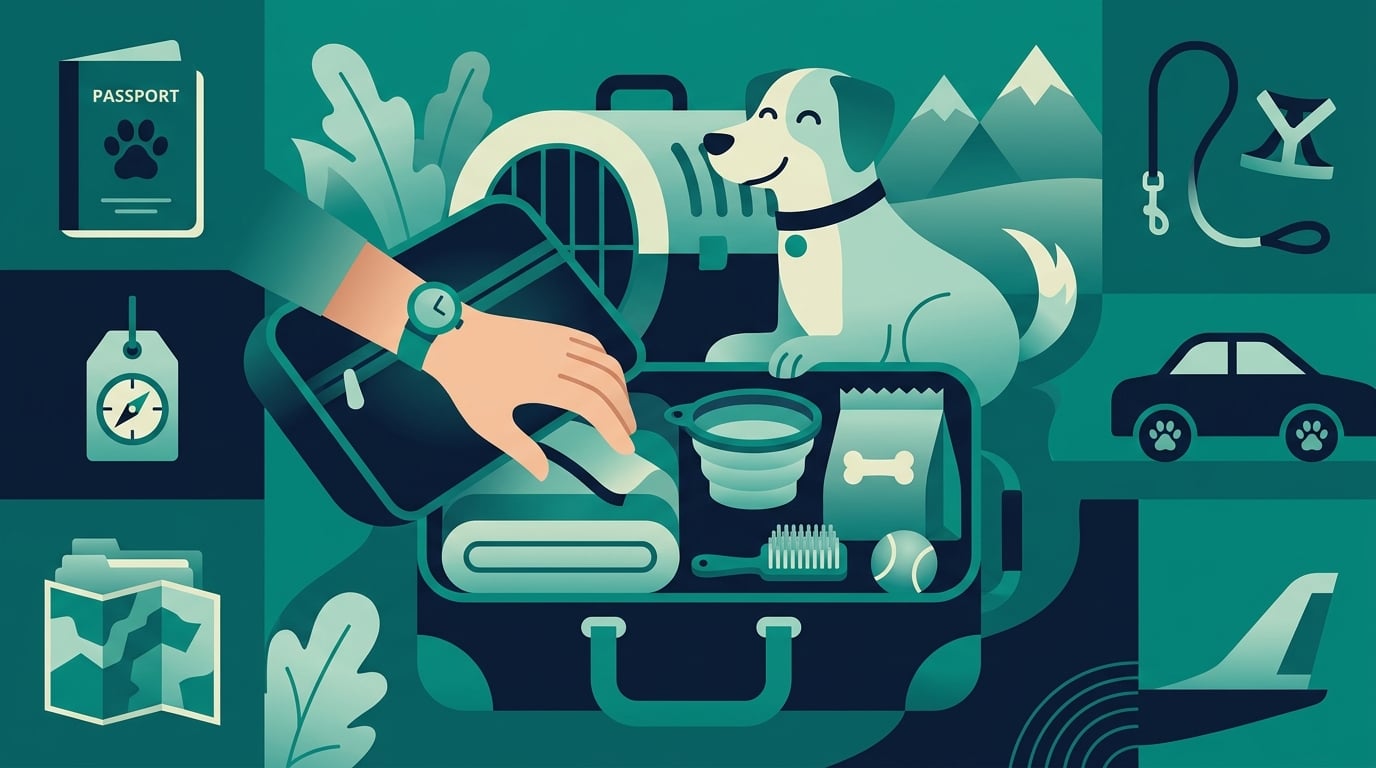
Packing for your pet is just as important as packing for yourself. Here's a comprehensive checklist organized by category:
Food and water: Bring enough of your pet's regular food for the entire trip, plus a day or two extra. Switching foods mid-trip can cause digestive upset. Pack a collapsible water bowl and a bottle of water from home — some pets are sensitive to changes in water source.
Medications: Pack all prescriptions in their original labeled containers. Bring more than you think you'll need — losing a pill or two is easy when you're on the road.
Comfort items: A familiar blanket, toy, or piece of your clothing can significantly reduce anxiety. Scent is powerful for animals — something that smells like home is genuinely calming.
Waste supplies: Poop bags, a portable litter box for cats, and hand sanitizer. Don't assume your destination will have these readily available.
ID and documents: A physical ID tag with your cell phone number (not your home address), vaccination records, and the health certificate if required.
First aid basics: Gauze, antiseptic wipes, tweezers for ticks, and the number for an emergency vet near your destination.
One often-overlooked item: a recent photo of your pet on your phone. If they go missing, you'll want to be able to show people exactly what they look like — and post to local lost pet groups immediately.
Road Trips: Making the Drive Comfortable and Safe
Car travel is the most common way people travel with pets, and it comes with its own set of considerations. The biggest mistake most pet owners make? Letting their dog roam freely in the car. An unrestrained 60-pound dog becomes a 2,700-pound projectile in a 35 mph crash — that's not an exaggeration, it's physics.
Use a crash-tested harness, a secured crate, or a pet barrier to keep your animal safe. Look for products that have been tested by the Center for Pet Safety — not all pet restraints are created equal.
For long drives, plan stops every 2–3 hours to let your dog stretch, relieve themselves, and drink water. Cats generally do better staying in their carrier throughout the trip — opening the carrier in a moving car is a recipe for a panicked animal and a dangerous distraction.
Temperature is critical. Never leave your pet in a parked car, even with the windows cracked. On a 70°F day, the interior of a car can reach 100°F within 20 minutes. If you need to stop somewhere pets aren't allowed, take turns going in or use a drive-through.
If you're crossing into a new country or state, use the Unit Converter to quickly convert distances, temperatures, and weights — especially useful when reading foreign road signs or vet documentation that uses metric measurements.
Flying with Pets: What the Airlines Won't Tell You
Air travel with pets is more complicated than most people expect. Here's what you need to know before you book:
Cabin vs. cargo: Small pets (typically under 20 lbs including carrier) can often fly in the cabin under the seat in front of you. Larger pets must travel as checked baggage or cargo — a stressful and sometimes dangerous option that many vets advise against when possible.
Airline fees: Pet fees vary widely — from $95 to $200 each way for in-cabin pets. Factor this into your travel budget. Use the Percentage Calculator to see how much pet fees add to your total trip cost as a percentage — it can be eye-opening when comparing airline options.
Breed restrictions: Many airlines ban brachycephalic (flat-faced) breeds like bulldogs, pugs, and Persian cats from cargo due to respiratory risks. Some airlines have expanded these restrictions to the cabin as well.
Carrier requirements: Your carrier must fit under the seat and meet the airline's specific dimensions. Measure carefully — a carrier that's even an inch too tall may be rejected at the gate.
Book your pet's spot when you book your ticket — most airlines have a limited number of pet spots per flight, and they fill up fast on popular routes.
Finding Pet-Friendly Accommodations
Not all "pet-friendly" hotels are created equal. Some charge hefty non-refundable pet fees, restrict certain breeds or sizes, or limit pets to specific room types. Always call ahead to confirm the details — don't rely solely on what's listed on the booking site.
Vacation rentals through platforms like Vrbo or Airbnb often offer more flexibility for pet owners, with full kitchens (great for preparing your pet's food), fenced yards, and more space for larger dogs. Read reviews specifically mentioning pets — other pet owners will tell you what the listing won't.
When you arrive at any accommodation, do a quick safety sweep: check for gaps under fences, toxic plants, unsecured trash cans, and anything your pet might chew or swallow. A few minutes of prevention saves a lot of stress.
Managing Anxiety: For Your Pet and Yourself
Travel anxiety is real for animals. Signs include excessive panting, drooling, whining, hiding, or refusing to eat. Here are some strategies that genuinely help:
Practice runs: Before a long trip, take your pet on several short car rides or crate sessions so the experience becomes familiar rather than alarming.
Pheromone products: Adaptil (for dogs) and Feliway (for cats) are synthetic pheromone sprays and diffusers that many pet owners find helpful for reducing stress. Spray the carrier 30 minutes before travel.
Thundershirts: These snug-fitting wraps apply gentle, constant pressure — similar to swaddling — and can reduce anxiety in some dogs and cats.
Withhold food before travel: Feeding your pet 3–4 hours before a car or plane trip reduces the risk of motion sickness. Water is fine up until departure.
Your own calm energy matters more than you might think. Animals are remarkably attuned to their owners' stress levels. If you're anxious about the trip, your pet will pick up on it. Take a breath, speak in a calm voice, and project confidence — it genuinely helps.
The Bottom Line
Traveling with a pet takes more planning than traveling solo, but the payoff — having your companion with you on adventures — is worth it for most pet owners. The key is preparation: visit your vet, pack thoughtfully, research your accommodations, and give your pet time to adjust to the experience gradually.
Start with a shorter trip to test the waters before committing to a cross-country journey. You'll quickly learn what your specific animal needs to feel comfortable on the road — and you'll both be better travelers for it.
Before you act on this
This article is for general educational purposes only. Everyone’s situation is different, so before making any decisions please refer to a licensed veterinarian or a certified animal behaviorist who can advise you based on your specific circumstances.