How to Tell If Your Pet Is Drinking Enough Water (And What to Do If They're Not)
Water is the most essential nutrient your pet consumes every single day — yet it's the one most pet owners pay the least attention to. Unlike food, where you measure out portions and track ingredients, water tends to be a "fill it and forget it" situation. But dehydration in dogs and cats can sneak up fast, and chronic low-level dehydration is linked to kidney disease, urinary tract infections, and digestive problems that are expensive to treat and painful for your pet.
The good news: once you know what to look for and how to calculate your pet's actual water needs, keeping them properly hydrated becomes simple. This guide walks you through the numbers, the warning signs, and the practical tricks that actually work.
How Much Water Does Your Pet Actually Need?
The general rule of thumb for dogs is 1 ounce of water per pound of body weight per day. So a 40-pound Labrador needs roughly 40 ounces — about 5 cups — of water daily. For cats, the guideline is similar: approximately 3.5 to 4.5 ounces per 5 pounds of body weight per day. A 10-pound cat should be drinking around 7–9 ounces, or just under a cup.
These are baseline numbers. Activity level, weather, diet type, and health status all shift the requirement. A dog that just ran three miles in July heat needs significantly more than one that napped on the couch all day. If your pet eats wet food, they're already getting a meaningful chunk of their moisture from meals — wet food is typically 70–80% water, while dry kibble is only about 10%. That difference matters a lot when you're calculating total daily intake.
If you're ever converting between milliliters and ounces — say, your vet gives you a recommendation in metric units — the Unit Converter makes that quick and painless. Just plug in the number and get the equivalent in whatever unit you're working with.
The 5 Warning Signs of Dehydration in Pets
Dehydration doesn't always look dramatic. By the time a pet is visibly lethargic and refusing water, they're often already significantly dehydrated. Here are the early and mid-stage signs to watch for:
Skin tent test fails: Gently pinch the skin at the back of your pet's neck and release. In a well-hydrated pet, it snaps back immediately. If it stays tented or returns slowly, dehydration is likely.
Dry or sticky gums: Healthy gums should be moist and slippery. Press your finger against the gum and release — the white spot should return to pink within 2 seconds (capillary refill time). Longer than that is a red flag.
Sunken or dull eyes: Eyes that look slightly recessed or lack their usual brightness can indicate fluid loss.
Reduced urination: If your dog is going out less frequently or your cat's litter box has noticeably fewer clumps, that's a sign the body is conserving water.
Lethargy and loss of appetite: A pet that's suddenly less interested in food or play, especially in warm weather, may be dehydrated rather than simply tired.
If you notice two or more of these signs together, contact your vet. Moderate to severe dehydration requires professional treatment — sometimes IV fluids — and shouldn't be managed at home alone.
How to Actually Measure What Your Pet Is Drinking
Most pet owners have no idea how much their pet actually drinks. Here's a simple method: fill the water bowl with a measured amount each morning — say, exactly 32 ounces. At the end of the day, measure what's left. The difference is roughly what your pet consumed (accounting for evaporation, which is minimal indoors).
Do this for three to five days and average the results. Then compare that average to your pet's target intake based on their weight. If your 50-pound dog should be drinking 50 ounces but is consistently only drinking 30, that's a 40% shortfall — and worth addressing. You can use the Percentage Calculator to quickly figure out how far off your pet's intake is from their daily target.
For multi-pet households, this gets trickier. Try separating pets during water-tracking periods, or use individual water stations in different rooms to get a clearer picture of who's drinking what.
Why Some Pets Refuse to Drink Enough
Pets don't always drink enough simply because they're not thirsty — sometimes there are environmental or behavioral reasons. Common culprits include:
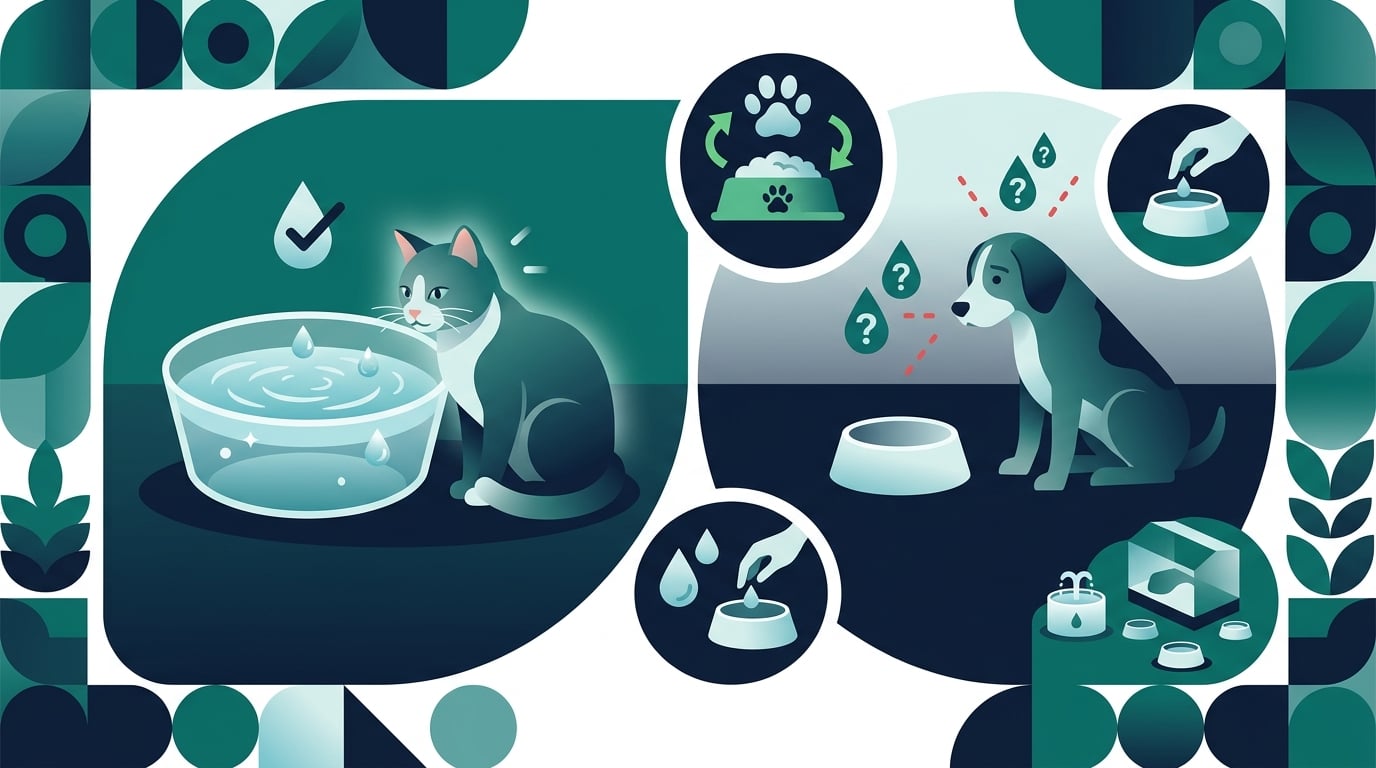
Bowl placement: Many cats dislike having their water bowl next to their food bowl. In the wild, water sources near prey can be contaminated — so instinct tells them to drink away from where they eat. Try moving the water bowl to a different room.
Bowl material: Some pets are sensitive to the smell of plastic. Stainless steel or ceramic bowls are often better accepted and easier to keep clean.
Water freshness: Pets often prefer moving water. A pet fountain can dramatically increase water intake for cats especially — many owners report their cats drinking two to three times more once a fountain is introduced.
Bowl depth: Cats with sensitive whiskers may avoid deep bowls because their whiskers touch the sides (whisker fatigue). Wide, shallow dishes or fountains with open basins solve this.
Water temperature: Some dogs prefer slightly cool water, especially in summer. Adding a few ice cubes can encourage drinking.
Practical Strategies to Boost Your Pet's Water Intake
If your pet is consistently under-drinking, here are proven strategies that work:
Switch to or add wet food: Even replacing one dry meal per day with wet food meaningfully increases total fluid intake. For cats especially, this can be a game-changer for kidney and urinary health.
Add water or low-sodium broth to kibble: A splash of warm water or unsalted chicken broth (no onion or garlic) makes dry food more palatable and adds moisture. Many dogs love it.
Offer multiple water stations: Place bowls in several locations around the house. More access points means more opportunities to drink, especially for older or less mobile pets.
Use a pet water fountain: The movement and filtration keep water fresh and oxygenated. Most cats and many dogs prefer it to a static bowl.
Hydrating treats: Frozen treats made from diluted low-sodium broth, or fruits like watermelon (seedless, no rind) for dogs, add hydration in a fun way.
When Drinking Too Much Is Also a Problem
It's worth noting that excessive thirst — called polydipsia — can be just as concerning as too little drinking. If your pet is suddenly drinking dramatically more than usual and urinating more frequently, that can signal diabetes, kidney disease, Cushing's disease, or other conditions that need veterinary attention. A sudden change in either direction is worth a vet call.
The baseline measurements you take now become invaluable later. If you know your dog normally drinks about 35 ounces a day and suddenly they're drinking 70, you have a concrete data point to share with your vet — which speeds up diagnosis and treatment.
The Bottom Line
Hydration is one of the simplest and most impactful things you can manage for your pet's long-term health. Calculate their daily water target based on weight, measure what they're actually drinking for a few days, and make small environmental changes if they're falling short. Most pets will respond quickly to a cleaner bowl, a better location, or a fountain — and your vet bills down the road will reflect the difference.
Start today: weigh your pet, calculate their target intake, and measure their bowl. It takes five minutes and could add years to their life.
Before you act on this
This article is for general educational purposes only. Everyone’s situation is different, so before making any decisions please refer to a licensed veterinarian or a certified animal behaviorist who can advise you based on your specific circumstances.