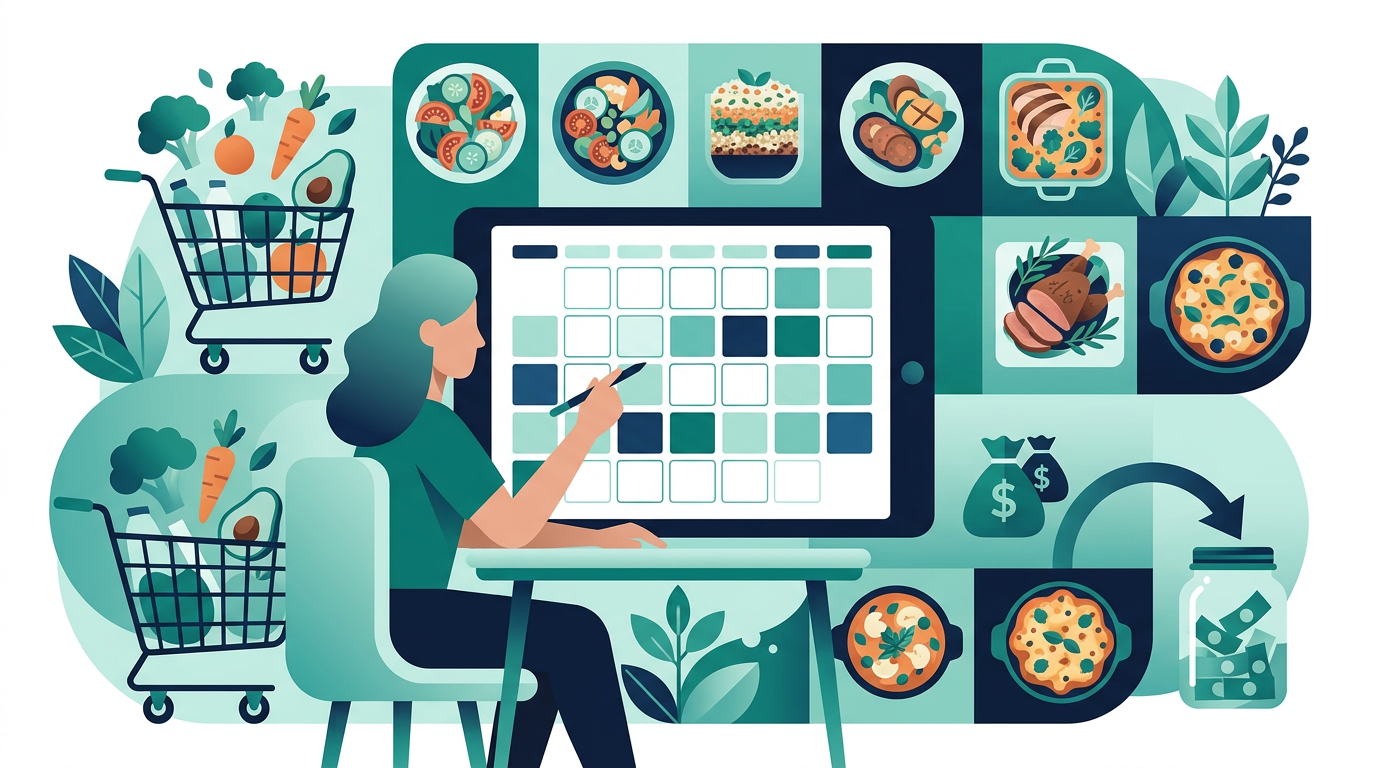
How to Meal Plan on a Budget: Save $200 a Month Without Eating Boring Food
You open the fridge at 6 PM, stare blankly at a half-empty jar of mustard and some leftover rice, and end up ordering takeout for the third time this week. Sound familiar? Meal planning sounds like something only hyper-organized people do — but the truth is, even a loose plan can save you $200–$400 a month and cut your weeknight stress dramatically. Here's how to build a system that actually works for real life.
Why Most People Fail at Meal Planning (And How to Avoid It)
The biggest mistake is trying to plan every single meal with military precision. You schedule a different elaborate recipe for every night of the week, then Wednesday happens — you're exhausted, the chicken is still frozen, and the plan falls apart. By Thursday you've abandoned the whole thing.
A better approach is to plan loosely: decide on 4–5 dinners for the week, keep 2 nights flexible for leftovers or a simple fallback meal, and don't stress about lunches beyond "use what's already in the fridge." This gives you structure without rigidity — and structure is what saves money.
Step 1: Build Your Meal Rotation (The 10-Meal Method)
Start by writing down 10 meals your household actually enjoys and knows how to make. Not aspirational recipes you've bookmarked — meals you've cooked before and will cook again. These become your rotation. Each week, you pick 4–5 from the list.
Why 10? It's enough variety that you won't feel like you're eating the same thing constantly, but small enough that you can shop efficiently and build real cooking speed. After a few weeks, you'll be able to make your rotation meals almost on autopilot.
Include at least 2 "lazy" meals — things like pasta with jarred sauce, sheet-pan chicken, or tacos — for low-energy nights
Include 1–2 meals that make great leftovers (soups, stews, grain bowls) to cover lunch the next day
Include at least 1 "pantry meal" that uses only shelf-stable ingredients, for weeks when fresh produce runs low
Step 2: Shop With a Budget — and Stick to It
Before you write your grocery list, set a weekly food budget. The USDA's "thrifty" food plan suggests roughly $250–$300 per month for a single adult, or $500–$650 for a family of four — but many households spend far more without realizing it. Tracking your actual spending for just two weeks is often eye-opening.
Once you have a number, use the Percentage Calculator to see how your grocery spending compares to your take-home income. Most financial advisors suggest keeping total food costs (groceries + dining out) under 10–15% of net income. If you're over that, meal planning is one of the fastest ways to close the gap.
A few shopping rules that make a real difference:
Shop with a list, never without one. Unplanned purchases are the #1 budget killer at the grocery store.
Check the unit price, not the package price. A bigger package isn't always cheaper per ounce — use the shelf tag's unit price to compare.
Shop the perimeter first. Produce, proteins, and dairy are usually around the edges; the center aisles are where impulse buys live.
Buy proteins in bulk when on sale. Chicken thighs, ground beef, and pork shoulder freeze beautifully and often go on sale in family packs at a significant discount.
Step 3: Calculate Your Real Savings
Here's where it gets motivating. The average American household spends about $3,000 per year on restaurants and takeout. A home-cooked meal typically costs $2–$5 per serving; a restaurant meal averages $13–$20. If you replace just four takeout meals per week with home cooking, you could save $150–$250 per month — that's $1,800–$3,000 per year.
When you spot a sale on a staple item — say, pasta is 40% off — use the Discount Calculator to quickly figure out how much you're actually saving and whether it's worth stocking up. Buying 6 boxes of pasta at 40% off instead of 1 box at full price is a legitimate money move, as long as you'll actually use it before it expires.
Step 4: Prep Smarter, Not Harder
Full meal prep — cooking everything on Sunday and portioning it into containers — works great for some people and feels like a chore for others. A middle-ground approach is component prep: spend 30–45 minutes on the weekend doing a few high-leverage tasks that make weeknight cooking faster.
Cook a big batch of grains. A pot of rice, quinoa, or farro takes 20 minutes and can anchor 3–4 different meals throughout the week.
Wash and chop vegetables. Pre-cut veggies in the fridge get used; whole vegetables in the crisper drawer often don't.
Marinate proteins. Chicken thighs or pork chops marinating in the fridge are ready to cook in 20 minutes on a weeknight.
Make a big batch of a sauce or soup. A large pot of tomato sauce, chili, or lentil soup covers multiple meals and freezes well.
Step 5: Handle Dining Out Without Derailing Your Budget
Meal planning doesn't mean never eating out — it means eating out intentionally. Budget a specific amount for restaurants each week (many people find $50–$75 per person per week is comfortable), and treat it as a line item, not an afterthought.
When you do go out, use the Tip Calculator to split the bill and calculate gratuity accurately — especially when dining with a group. Knowing the exact total before you hand over your card keeps you from the "how did we spend $180?" moment that blows the weekly budget.
A few strategies to make dining out more budget-friendly without sacrificing the experience:
Go for lunch instead of dinner — the same dishes are often 20–30% cheaper at midday
Skip the drinks — beverages are the highest-margin item on any menu; water is free
Share an entrée or order an appetizer as your main — portions at most restaurants are larger than one person needs
Use restaurant apps and loyalty programs — many chains offer free items or significant discounts to members
Putting It All Together: Your First Week
Don't try to overhaul everything at once. For your first week, just do this: write down 5 dinners you want to make, make a grocery list based only on those meals, and set a budget before you shop. That's it. No elaborate prep, no color-coded spreadsheet.
After one week, you'll have a clearer picture of what worked and what didn't. Maybe you planned too many complex meals. Maybe you forgot to account for lunches. Adjust and try again. Within a month, you'll have a system that feels natural — and a noticeably lighter grocery bill to show for it.
The goal isn't perfection. It's progress: fewer last-minute takeout orders, less food waste, and more money staying in your pocket at the end of the month. Start small, stay consistent, and let the savings compound over time.
Before you act on this
This article is for general educational purposes only. Everyone’s situation is different, so before making any decisions please refer to a relevant qualified professional who can advise you based on your specific circumstances.