How to Read Your Pet's Body Language: A Complete Guide to Understanding What Your Pet Is Really Telling You
Your pet is talking to you constantly — through their tail, their ears, their posture, and even the way they blink. The problem is most of us were never taught how to listen. Misreading a dog's wagging tail as pure happiness or dismissing a cat's slow blink as boredom can lead to missed signals, unnecessary stress, and even accidental bites or scratches. Learning to decode your pet's body language is one of the most valuable skills you can develop as an owner — and it's easier than you think.
Why Body Language Matters More Than You Think
Animals communicate almost entirely through body language. Unlike humans, they can't tell you when they're anxious, in pain, or feeling threatened. Instead, they send signals through subtle physical cues — and when those signals are ignored, they escalate. A dog that growls is giving you a warning. If that warning is punished or ignored, the next step is often a bite. A cat that flattens its ears and tucks its tail is telling you it's overwhelmed. Push further, and you'll get scratched.
Understanding these signals doesn't just prevent accidents — it deepens your bond. When your pet realizes you're actually responding to what they're communicating, trust builds rapidly. You'll notice your dog relaxing more around strangers, or your cat choosing to sit near you instead of hiding under the bed.
Reading Dog Body Language: The Full Picture
The biggest mistake people make with dogs is reading one signal in isolation. A wagging tail doesn't automatically mean a happy dog — it means an emotionally aroused dog. The key is reading the whole body at once.
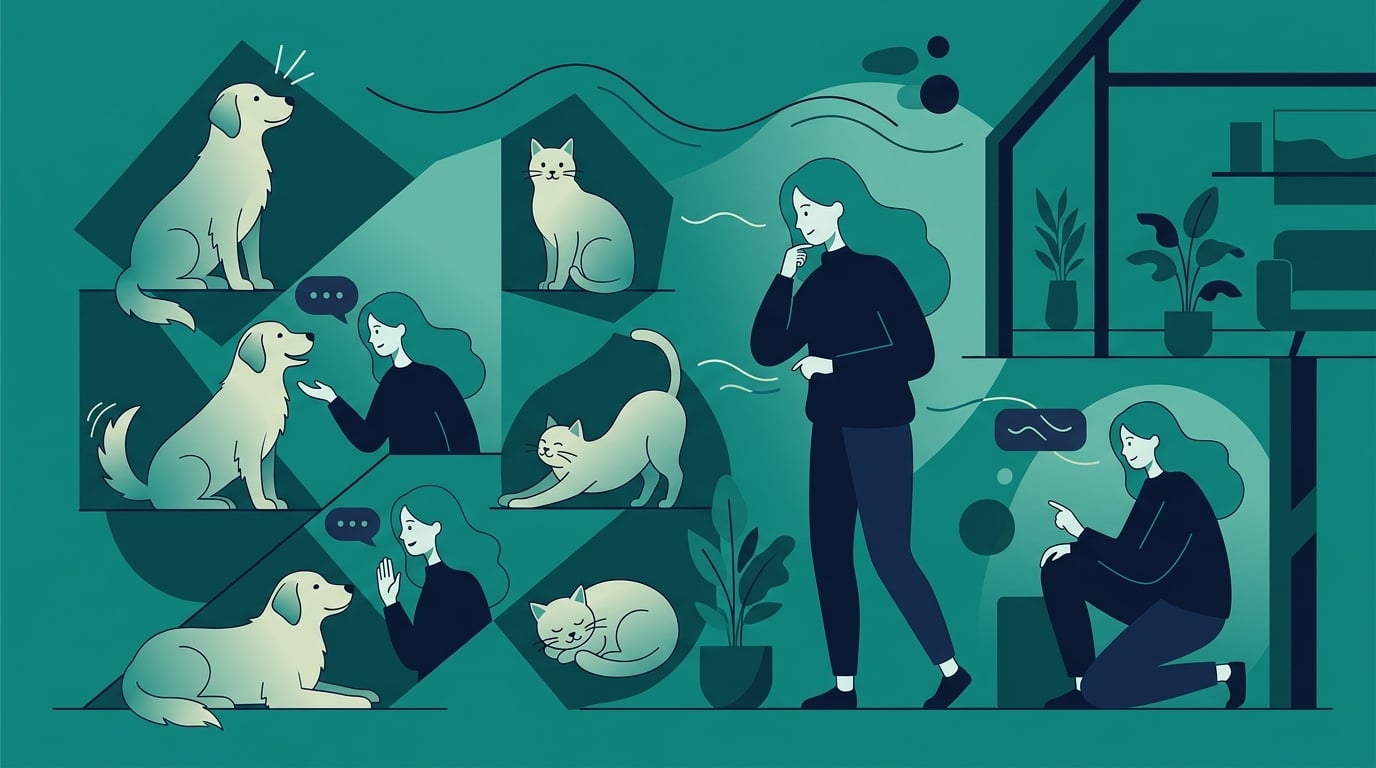
Tail position and movement: A tail held high and wagging fast in wide sweeps usually signals excitement or happiness. A tail tucked between the legs signals fear or submission. A stiff, slow wag with the tail held high can actually signal aggression or high alertness — not friendliness.
Ears: Ears forward and alert mean your dog is focused and curious. Ears pinned flat against the head signal fear, anxiety, or submission. Ears slightly back in a relaxed position usually mean your dog is calm and content.
Eyes: Soft, relaxed eyes with normal pupils mean a calm dog. Hard, staring eyes with a tense brow signal a challenge or threat. "Whale eye" — where you can see the whites of the eyes — is a classic stress signal. A slow blink or looking away is actually a calming signal, meaning your dog is trying to de-escalate tension.
Mouth and lips: A relaxed, slightly open mouth with a lolling tongue means a happy, comfortable dog. Lips pulled back to show teeth is a warning. Excessive yawning, lip-licking, or nose-licking when there's no food around are stress signals — your dog is trying to calm themselves or communicate discomfort.
Body posture: A dog leaning forward with weight on the front paws is assertive or curious. A dog crouching low with weight shifted back is fearful. A play bow — front end down, rear end up — is a universal invitation to play. Piloerection (hackles raised along the back) signals high arousal, which can be excitement, fear, or aggression depending on context.
Reading Cat Body Language: Subtle but Consistent
Cats are often labeled as mysterious or unpredictable, but they're actually very consistent communicators — once you know what to look for. The challenge is that cat signals are often more subtle than dog signals, and cats tend to escalate faster when ignored.
Tail signals: A tail held high like a flagpole means a confident, happy cat — especially when the tip curls slightly. A puffed-up tail means fear or aggression. A tail lashing back and forth rapidly signals irritation or overstimulation (this is your cue to stop petting). A slow, gentle tail sway means your cat is relaxed and content.
Ears: Forward-facing ears mean curiosity and engagement. Ears rotated sideways ("airplane ears") signal mild irritation or anxiety. Ears flattened completely back against the head mean fear or aggression — back off immediately.
Eyes: Slow blinking is one of the most important cat signals to know. When a cat slow-blinks at you, they're expressing trust and affection — you can slow-blink back to communicate the same. Dilated pupils can mean excitement, fear, or playfulness depending on context. Constricted pupils in bright light are normal, but constricted pupils in low light can signal aggression or pain.
Body posture: A cat that rolls onto its back and exposes its belly is showing trust — but this is NOT always an invitation to rub the belly (many cats will grab and bite if you do). A cat that arches its back and puffs up sideways is trying to look bigger and is frightened. A cat crouched low and tense is either stalking prey or feeling threatened.
Kneading and headbutting: Kneading (making biscuits) is a comfort behavior from kittenhood — a kneading cat is a content cat. Headbutting or "bunting" is how cats mark you with their scent glands and is a sign of deep affection and ownership (in the best way).
Stress Signals You Should Never Ignore
Both dogs and cats show stress signals that are easy to miss if you don't know what to look for. Catching these early can prevent behavioral problems and health issues — chronic stress suppresses the immune system and can lead to real physical illness in pets.
Common stress signals in dogs include: excessive panting when not hot, pacing, destructive behavior, sudden loss of appetite, hiding, excessive barking, or accidents in the house despite being house-trained. In cats, watch for: over-grooming (leading to bald patches), hiding for extended periods, changes in litter box habits, excessive vocalization, or sudden aggression toward people or other pets.
If you notice a cluster of these signals, it's worth examining what's changed in your pet's environment. New people, new pets, schedule changes, loud noises, or even rearranging furniture can trigger stress responses. Sometimes the fix is simple — a new hiding spot for a cat, or more structured exercise for a dog. If stress signals persist, a veterinary behaviorist can help.
Using This Knowledge Day-to-Day
Once you start reading body language, you'll find yourself making small adjustments that make a big difference. You'll notice when your dog is getting overstimulated at the dog park before a fight breaks out. You'll recognize when your cat has had enough petting before the bite happens. You'll be able to tell a vet or groomer exactly what your pet's stress signals look like, which helps them provide better care.
It also helps when introducing pets to new people or other animals. Watch for calming signals — yawning, sniffing the ground, turning away — and give your pet space when they show them. Never force a greeting. Let your pet set the pace, and reward calm, relaxed behavior with treats and praise.
If you're tracking your pet's health alongside their behavior, tools like the Unit Converter can help you convert your pet's weight measurements between pounds and kilograms for vet visits — since behavioral changes often correlate with weight changes that signal underlying health issues. And if you're budgeting for behavioral training classes or vet consultations, the Percentage Calculator makes it easy to figure out what percentage of your monthly pet budget you're allocating to training versus food versus healthcare.
The Bottom Line
Your pet is communicating with you every single day — through their posture, their eyes, their tail, and dozens of subtle micro-signals. Learning to read those signals isn't just about preventing bites or scratches. It's about building a relationship based on genuine understanding and mutual respect. When your pet knows you're listening, everything changes: they're calmer, more trusting, and more connected to you. And honestly, that's the whole point of having a pet in the first place.
Start small: pick one signal — like your dog's tail position or your cat's ear direction — and consciously observe it for a week. You'll be surprised how quickly the whole language starts to click into place.