Does Your Pet Have Allergies? How to Identify Triggers and Find Real Relief
Your dog won't stop scratching. Your cat keeps sneezing. You've tried switching shampoos, vacuuming more, and even changing their food — but nothing seems to help. Sound familiar? Pet allergies are one of the most common and frustrating health issues pet owners face, and they're frequently misdiagnosed or left untreated for months. The good news: once you understand what's actually triggering your pet's reaction, you can take targeted steps to bring them real relief.
The Three Main Types of Pet Allergies
Not all allergies are created equal. Pets can react to three broad categories of triggers, and knowing which type you're dealing with changes everything about how you respond.
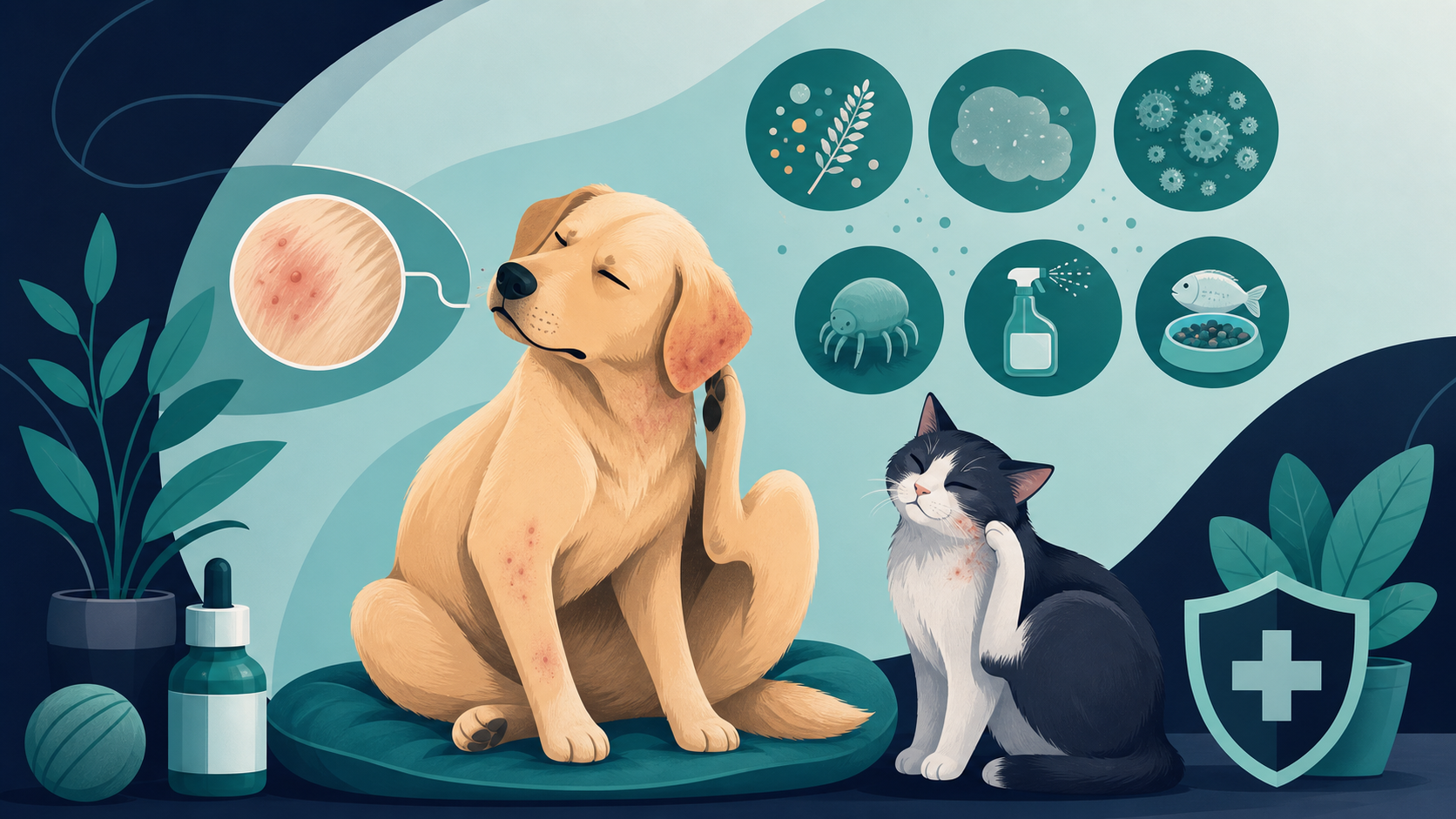
Environmental allergies (atopy): Pollen, mold, dust mites, and grass are the usual culprits. These tend to be seasonal at first, then year-round as sensitivity builds. Dogs with atopy often chew their paws, rub their face, and develop recurring ear infections.
Food allergies: Despite what many pet food ads imply, true food allergies are less common than environmental ones — but they do happen. Beef, chicken, dairy, and wheat are the most frequent offenders. The telltale sign is that symptoms don't improve with the seasons.
Flea allergy dermatitis (FAD): This is the most common skin condition in dogs and cats. A single flea bite can trigger an intense reaction in a sensitized pet. If you see hair loss near the base of the tail or intense itching in that area, FAD is high on the suspect list.
Recognizing the Signs: What Allergies Look Like in Dogs vs. Cats
Dogs and cats express allergic reactions differently, which is why owners sometimes miss the connection. In dogs, the most visible signs include:
Persistent scratching, especially around the face, ears, belly, and paws
Red, inflamed, or greasy skin
Recurring ear infections (often yeasty-smelling)
Paw licking that leaves rust-colored staining on the fur
Hot spots — raw, moist patches of irritated skin
Cats tend to show allergies differently. Watch for:
Over-grooming to the point of bald patches (especially on the belly and inner thighs)
Miliary dermatitis — tiny scabs scattered across the back and neck
Sneezing, watery eyes, or nasal discharge
Vomiting or loose stools (more common with food allergies)
One important note: many of these symptoms overlap with other conditions like mange, ringworm, or hormonal imbalances. A vet visit is essential before you start eliminating foods or changing your pet's environment.
How to Investigate a Food Allergy: The Elimination Diet
If your vet suspects a food allergy, they'll likely recommend an elimination diet trial — and it requires patience. The process works like this:
Switch to a novel protein or hydrolyzed diet: Novel proteins are ingredients your pet has never eaten before — think venison, rabbit, or kangaroo. Hydrolyzed diets break proteins into pieces too small to trigger an immune response. Your vet can recommend the right option.
Stick to it strictly for 8–12 weeks: No treats, table scraps, or flavored medications during this period. Even a small amount of the offending protein can reset the clock.
Reintroduce old foods one at a time: If symptoms return when you add back a specific ingredient, you've found your culprit.
When comparing prescription elimination diets, the price difference can be significant. Use our Percentage Calculator to figure out exactly how much more a prescription diet costs compared to your current food — sometimes the difference is smaller than you'd expect when you factor in fewer vet visits for recurring skin infections.
Managing Environmental Allergies at Home
Environmental allergies can't always be cured, but they can be managed effectively. Here's what actually makes a difference:
Wipe paws after outdoor walks: Pollen and grass allergens cling to paws and get tracked inside. A quick wipe with a damp cloth after every walk can dramatically reduce your dog's exposure.
Wash bedding weekly: Dust mites thrive in pet bedding. Washing in hot water (at least 130°F / 54°C) kills them. Use our Unit Converter if you need to convert temperature settings between Fahrenheit and Celsius for your washing machine.
Use a HEPA air purifier: Especially in rooms where your pet sleeps. These filters capture airborne allergens like pollen, mold spores, and dander.
Bathe your pet regularly: For dogs with atopy, a weekly bath with a gentle, hypoallergenic shampoo can wash away surface allergens and soothe irritated skin. Don't over-bathe cats — most groom themselves effectively.
Keep windows closed during high pollen days: Check your local pollen count and limit outdoor time on peak days, especially in spring and fall.
Flea Allergy Dermatitis: Prevention Is the Only Real Cure
If your pet has FAD, the goal isn't to treat the itch — it's to prevent flea exposure entirely. Even one flea bite every two weeks is enough to keep a sensitized pet in a constant state of reaction. That means:
Year-round flea prevention for every pet in the household (even indoor-only cats)
Treating your home — carpets, furniture, and pet bedding — with a flea spray or fogger
Vacuuming frequently and disposing of the bag or canister contents outside
Talk to your vet about the most effective flea prevention product for your pet's size and lifestyle. Prescription options like isoxazolines (Bravecto, NexGard, Simparica) are generally more effective than over-the-counter alternatives.
When to See a Vet — and What to Expect
If your pet's symptoms are mild and seasonal, you might manage them at home with the strategies above. But see a vet promptly if:
Symptoms are severe, spreading, or getting worse
Your pet has open sores, significant hair loss, or signs of a secondary infection (pus, strong odor, swelling)
Over-the-counter antihistamines (which work in some dogs but rarely in cats) aren't helping
You've tried an elimination diet and still can't identify the trigger
Your vet may recommend allergy testing (intradermal skin testing or blood tests), prescription medications like Apoquel or Cytopoint for dogs, or referral to a veterinary dermatologist. Immunotherapy — a series of injections that gradually desensitize your pet to specific allergens — is also an option for severe environmental allergies and has a good long-term success rate.
Building a Long-Term Allergy Management Plan
Living with an allergic pet is a marathon, not a sprint. The most successful owners keep a simple symptom journal — noting flare-up dates, what the pet ate, where they went, and what the pollen count was. Over time, patterns emerge that make it much easier to anticipate and prevent reactions rather than just treating them after the fact.
Work with your vet to establish a baseline and revisit the plan seasonally. Allergies can evolve — a pet that only reacted to grass pollen at age two might develop dust mite sensitivity by age five. Staying proactive keeps your pet more comfortable and often reduces the total cost of care over time.
Your pet can't tell you they're miserable — but the scratching, the chewing, the restless nights say it clearly enough. With the right diagnosis and a consistent management strategy, most allergic pets go on to live comfortable, happy lives. The key is not giving up after the first treatment doesn't work. Allergies take time to unravel, but the relief you'll both feel when you find the answer is absolutely worth it.
Before you act on this
This article is for general educational purposes only. Everyone’s situation is different, so before making any decisions please refer to a licensed veterinarian or a certified animal behaviorist who can advise you based on your specific circumstances.