How to Create a Professional Invoice That Gets You Paid Faster
If you've ever sent an invoice and then spent the next two weeks anxiously refreshing your email, wondering why the client hasn't paid yet — you're not alone. Late payments are one of the most frustrating parts of freelancing or running a small business. And here's the thing most people don't talk about: sometimes, the invoice itself is the problem. A poorly formatted, confusing, or incomplete invoice gives clients an easy excuse to delay, dispute, or outright ignore your request for payment.
The good news? Creating a clean, professional invoice doesn't require an accounting degree or expensive software. In this guide, we'll walk through everything — from what your invoice absolutely must include, to how to follow up on overdue payments without feeling like you're begging for what you've already earned.
Why Your Invoice Quality Directly Affects When You Get Paid
Think about it from the client's side for a moment. When a vague, disorganized invoice lands in their inbox — no clear due date, no itemized breakdown, maybe even a typo in their company name — what's the first instinct? To set it aside and deal with it later. And "later" has a way of turning into never.
A professional invoice, on the other hand, signals that you take your business seriously. It communicates trust. It answers every question the client might have before they even think to ask it. When your invoice is clear, complete, and easy to act on, payment happens faster — sometimes dramatically faster.
Studies have shown that invoices with specific payment terms (like "Net 15" instead of "payment due soon") get paid significantly earlier. Small details carry real financial weight.
What Every Professional Invoice Must Include
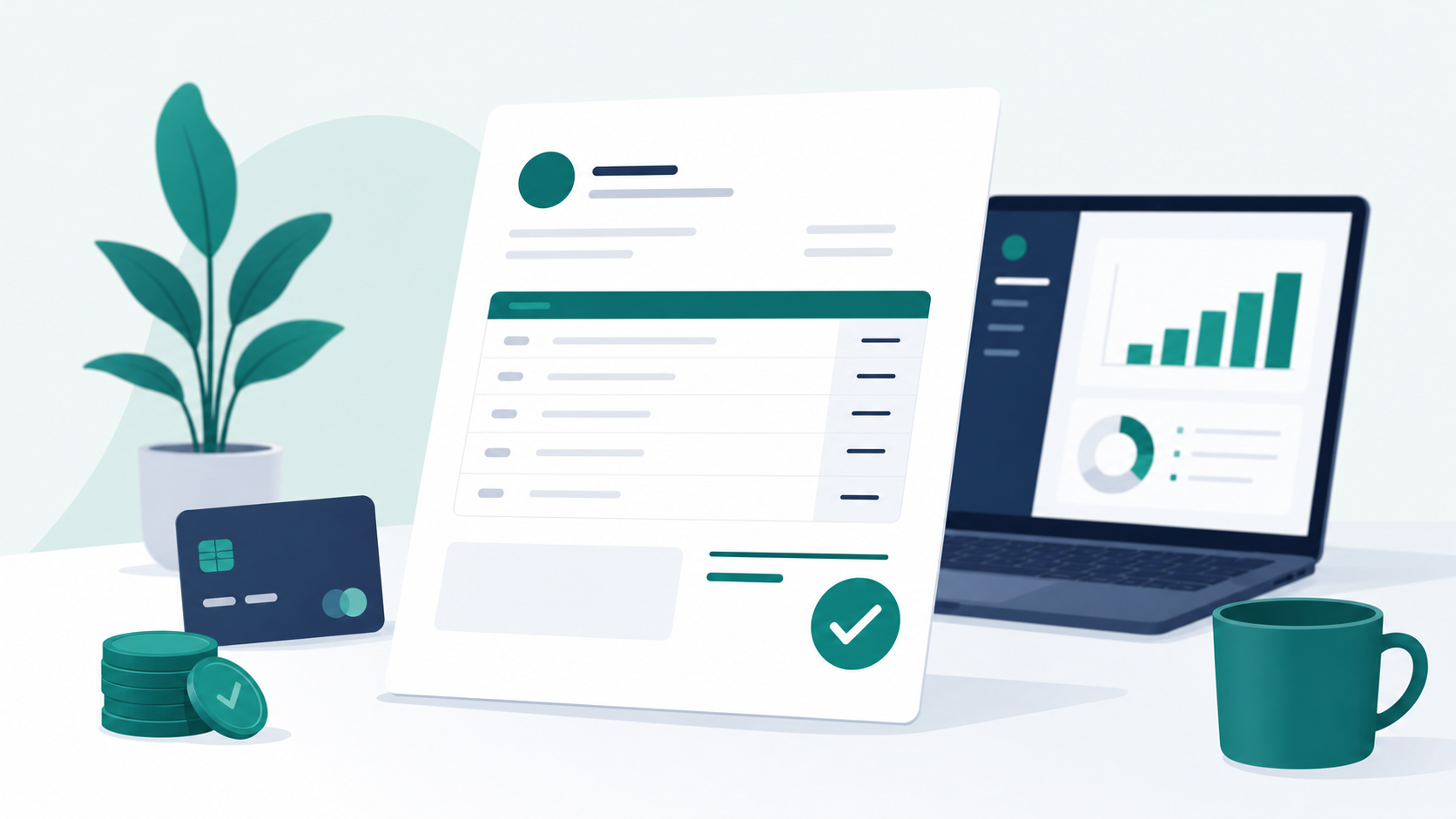
Before you hit send on your next invoice, run through this mental checklist. A solid invoice should always have:
- Your business information — Your full name or business name, address, email, and phone number. The client needs to know exactly who they're paying.
- Client's information — Their full name or company name, and billing address. Getting this wrong is a surprisingly common mistake that can delay processing on their end.
- A unique invoice number — This keeps your records organized and gives the client a reference point when they process payment through their accounting system.
- Invoice date and due date — The date you sent it, and the specific date payment is expected. "Due upon receipt" is vague and easy to ignore.
- An itemized list of services or products — Break down what you did, how many hours or units, and the rate. Don't just write "design work — $1,500." Write "Brand identity design, 15 hours at $100/hr."
- Subtotal, taxes, and total — Make the math obvious. If there are taxes or fees, show them separately so the total isn't a surprise.
- Payment methods accepted — Bank transfer? PayPal? Credit card? Tell them exactly how to pay you.
- Notes or terms — Any late payment fees, project-specific terms, or a simple thank-you note goes a long way.
Common Invoicing Mistakes Freelancers Make That Delay Payment
Even experienced freelancers fall into these traps more often than they'd like to admit.
- Sending invoices late. If you wait two weeks after completing a project to send the invoice, don't be surprised when payment takes another two weeks on top of that. Invoice promptly — ideally the same day you deliver the work.
- Being too vague about what you did. "Consulting services" tells the client nothing. Vague descriptions create confusion, which creates delay. Be specific.
- Forgetting a due date. No due date means no urgency. Clients will pay you when they get around to it, which might be never.
- Not following up. Many freelancers send an invoice and then wait in silence, hoping for the best. A polite follow-up at the due date is completely professional and often necessary.
- Using inconsistent formats. Sending invoices that look different every time makes your business look disorganized and can confuse clients' accounting teams.
How to Create a Polished Invoice in Under 3 Minutes
You don't need to wrestle with Word templates or pay for invoicing software you'll use twice a month. Our free professional invoice generator lets you build a clean, complete, client-ready invoice in minutes — no account required, no subscription, no hassle.
Here's how simple the process is:
- Enter your business details — Your name, logo if you have one, and contact info.
- Add your client's information — Company name, contact person, billing address.
- List your services — Add line items with descriptions, quantities, and rates. The tool calculates totals automatically.
- Set your invoice number and due date — Keep it sequential and specific.
- Download or send — Export a professional PDF that's ready to go.
The whole thing takes about three minutes if you know your numbers going in. No design skills needed. No formatting headaches. Just a clean, professional document that tells your client exactly what they owe and when.
Using a free invoice generator online like this one also means you're not reinventing the wheel every billing cycle. The format is consistent, the math is accurate, and the result looks like it came from an established business — even if you're just getting started.
Best Practices for Invoice Numbering, Dating & Payment Terms
Invoice numbering might seem trivial, but it matters more than you think. Use a consistent system — either sequential (INV-001, INV-002) or date-based (INV-2025-06-01). This makes it easy to track invoices, reference them in conversations, and stay organized at tax time.
Invoice dating should always reflect the actual date you send the invoice, not when you completed the work. If you're sending it on June 15th, that's the invoice date — even if the project wrapped up on June 10th.
Payment terms are where a lot of freelancers leave money on the table. Here's a quick breakdown of common terms:
- Due on receipt — Payment expected immediately. Works for smaller amounts or one-time clients.
- Net 7 / Net 14 — Payment due within 7 or 14 days. Good for ongoing clients or smaller projects.
- Net 30 — Standard in many industries, but can feel like a long wait for freelancers.
If late payments are a recurring problem, consider adding a late fee clause — something like "A 1.5% monthly fee applies to invoices unpaid after the due date." Just make sure you communicate this upfront, ideally in your contract, before it becomes relevant.
How to Follow Up on Unpaid Invoices Without Awkwardness
Chasing payments feels uncomfortable for a lot of people. It shouldn't. You did the work. You deserve to be paid. Following up professionally is just part of running a business.
Here's a simple timeline that works well:
- 3 days before the due date — A friendly heads-up email. Something like: "Just a quick reminder that invoice #INV-042 for $850 is due on June 18th. Let me know if you need anything from my end." This is low-pressure and often prompts early payment.
- On the due date — If you haven't received payment, send a brief, professional note. Attach the invoice again. Don't assume they saw the first one.
- One week after the due date — A firmer follow-up. Keep the tone professional, but be direct: "I wanted to check in on the outstanding invoice. Could you let me know when I can expect payment?"
- Two weeks or more overdue — At this point, it's reasonable to mention your late fee policy and, if necessary, discuss next steps.
The key is to stay calm and professional throughout. Most late payments aren't malicious — they're the result of busy accounting departments, overlooked emails, or simple forgetfulness. A clear, polite nudge is usually all it takes.
Freelancer vs. Small Business Invoicing: Key Differences
While the fundamentals are the same, there are a few meaningful differences depending on how you operate.
As a freelancer, your invoices are often simpler — one or two line items, sent directly to a client contact you know personally. The relationship is more informal, which means your follow-up style can be too. You're also more likely to be chasing payment yourself, without an accounting team to help.
As a small business, your invoices might include multiple products, tiered pricing, or project phases. You may be invoicing other businesses rather than individuals, which means navigating purchase orders, billing departments, and longer payment cycles. In this case, Net 30 terms are more common, and you may need to reference a PO number on your invoice.
Both situations benefit from consistent, professional invoicing. The format might scale, but the principles don't change: be clear, be specific, and make it easy for the client to pay you.
Start billing like a pro today
Getting paid on time starts with sending invoices that are impossible to ignore or misunderstand. The right format, the right details, and a clear due date can genuinely cut your payment wait time in half.
Create a free invoice now →If you've been cobbling together invoices in Google Docs or struggling with clunky templates, it's time for a better approach. Try our free professional invoice generator and see how fast you can put together something that looks polished, communicates clearly, and gets results.
You've already done the hard work. Getting paid for it shouldn't be the hard part.
Before you act on this
This article is for general educational purposes only. Everyone’s situation is different, so before making any decisions please refer to a qualified accountant, attorney, or business advisor who can advise you based on your specific circumstances.