How to Plan and Build a Backyard Deck: Estimating Materials, Costs, and Avoiding Rookie Mistakes
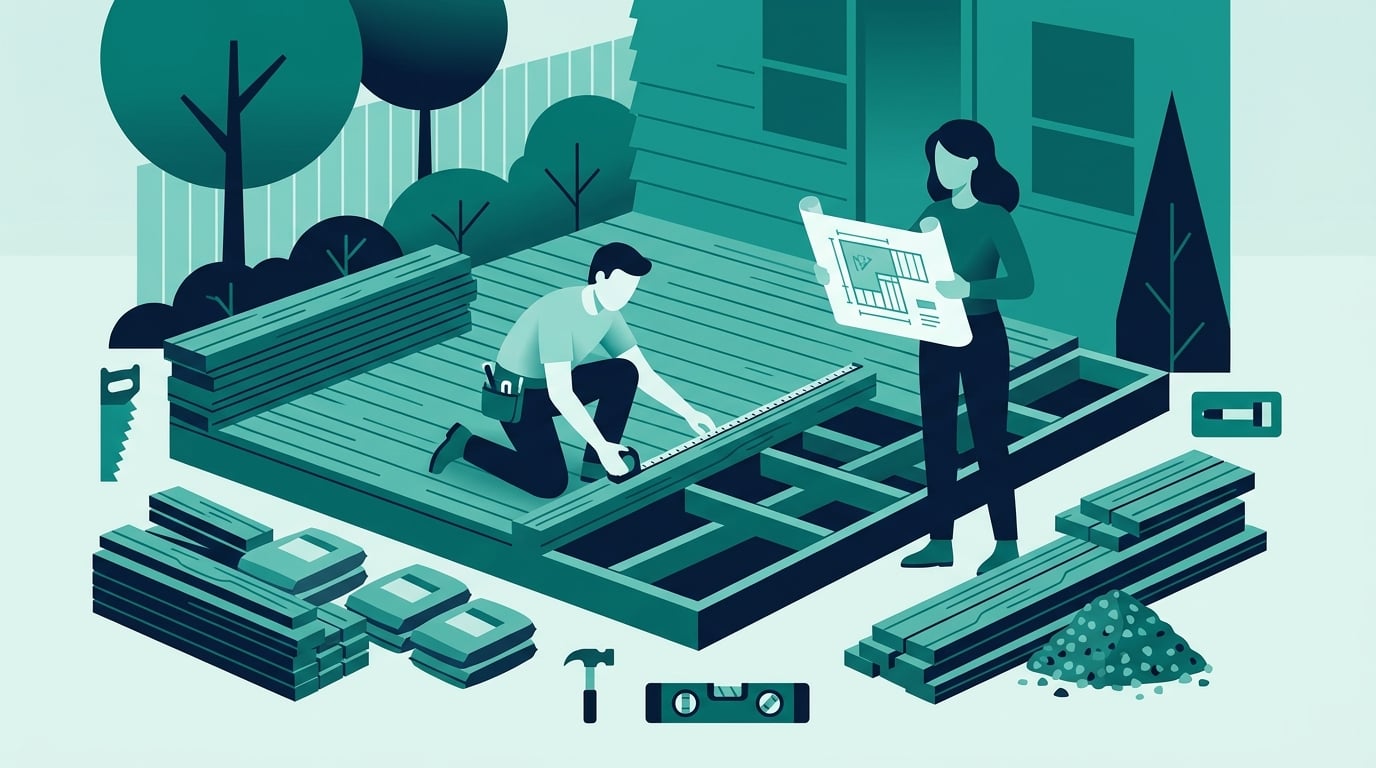
A backyard deck can transform your outdoor space from a patch of grass into a genuine living area — a place for summer barbecues, morning coffee, and lazy weekend afternoons. It's also one of the few home improvement projects that consistently delivers a strong return on investment, often recouping 60–80% of its cost in added home value. But here's the catch: most first-time deck builders dramatically underestimate what the project actually involves, and they end up making multiple trips to the hardware store, blowing their budget, or worse — building something structurally unsound.
This guide walks you through the planning process from start to finish: how to size your deck, calculate the lumber you need, estimate total costs, and avoid the most common mistakes that turn a weekend project into a month-long headache.
Start With a Solid Plan (Before You Touch a Tape Measure)
The single biggest mistake DIYers make is jumping straight to buying materials without a proper plan. Before you spend a dollar, you need to answer three questions: How big do you want the deck? What material will you use? And what local permits do you need?
Most municipalities require a building permit for decks over a certain size — typically anything attached to the house or over 200 square feet. Skipping this step can result in fines, forced removal, or complications when you sell your home. Check with your local building department first. It usually takes just a few days and costs $50–$200.
For sizing, think about how you'll actually use the space. A 10×12 foot deck (120 sq ft) comfortably fits a small table and four chairs. A 16×20 foot deck (320 sq ft) can handle a full outdoor dining set plus a grill station. Sketch it out on graph paper with your furniture drawn to scale — you'll be surprised how quickly space disappears.
Choosing Your Decking Material
Your material choice affects everything: cost, maintenance, longevity, and appearance. Here are the main options:
Pressure-treated lumber — The most affordable option at $2–$4 per linear foot. It's durable and widely available, but requires annual sealing and can warp or crack over time. Great for first-time builders on a budget.
Cedar or redwood — Naturally rot-resistant and beautiful, running $4–$7 per linear foot. It requires less maintenance than pressure-treated wood and has a warmer, more natural look.
Composite decking — Made from wood fiber and recycled plastic, composite boards cost $5–$12 per linear foot but are virtually maintenance-free. They won't rot, splinter, or need staining. The higher upfront cost often pays off over 10–15 years.
Hardwoods (Ipe, Tigerwood) — Extremely durable and stunning, but expensive at $8–$15 per linear foot. Best for homeowners who want a premium, long-lasting result.
How to Calculate Your Lumber Needs
This is where most DIYers get tripped up. Lumber is sold in linear feet, but you're thinking in square feet — and the conversion isn't always obvious. Here's a straightforward method:
Let's say you're building a 12×16 foot deck (192 square feet) using standard 5/4×6 decking boards (which are actually 5.5 inches wide). Here's the math:
Deck width: 12 feet = 144 inches
Board width: 5.5 inches + 0.25 inch gap = 5.75 inches per board
Number of boards needed: 144 ÷ 5.75 ≈ 25 boards
Each board is 16 feet long, so you need 25 boards × 16 feet = 400 linear feet of decking
Always add 10–15% for waste, cuts, and defects. So your final order would be around 440–460 linear feet. Use our Unit Converter to quickly switch between inches, feet, and meters if you're working from plans that use different measurement systems — especially useful if you're referencing European building guides or working with metric hardware.
For the structural framing (joists, beams, posts), you'll need to calculate separately. Joists are typically spaced 16 inches on center. For a 16-foot-long deck, you'd need one joist every 16 inches across the 12-foot width — that's about 10 joists, each 16 feet long. Add a rim joist around the perimeter and you're looking at roughly 200 additional linear feet of 2×8 or 2×10 lumber for framing.
Estimating Total Project Costs
A realistic budget for a 12×16 foot pressure-treated deck typically breaks down like this:
Decking boards: ~$400–$600 (pressure-treated) or $800–$1,500 (composite)
Framing lumber (joists, beams, posts): ~$300–$500
Concrete footings and hardware: ~$150–$300
Fasteners, screws, joist hangers: ~$100–$200
Railing system (if required): ~$300–$800
Permit fee: ~$50–$200
Tools (if you don't own them): ~$100–$300 rental or purchase
Total DIY cost: roughly $1,400–$2,800 for a basic pressure-treated deck. A contractor would charge $4,000–$8,000 for the same project, so the savings are real. Use our Percentage Calculator to figure out exactly how much you're saving versus hiring out, or to calculate the 10–15% waste buffer on your material quantities.
The Mistakes That Cost DIYers the Most
After talking to dozens of homeowners who've built their own decks, the same mistakes come up again and again:
Undersized footings. Your deck's posts need to sit on concrete footings that extend below the frost line — typically 36–48 inches in cold climates. Shallow footings heave in winter and can cause the entire structure to shift. Check your local frost depth before digging.
Wrong joist spacing for composite decking. Most composite boards require 12-inch joist spacing (not the standard 16 inches for wood) to prevent sagging. Always check the manufacturer's specs before framing.
Skipping the ledger flashing. Where your deck attaches to the house, water can infiltrate and rot the rim joist and house framing. Proper flashing tape and a drip cap are non-negotiable — this is the #1 cause of deck rot.
Buying all materials at once without checking for defects. Lumber varies wildly in quality. Buy your boards a few days early, let them acclimate, and cull any that are severely warped or have large knots in structural locations.
Working With Metric Plans or International Hardware
If you've downloaded deck plans from a European source, or you're using hardware with metric specifications, you'll need to convert measurements constantly. A joist spacing of "400mm on center" is the metric equivalent of roughly 15.75 inches — close to 16 inches but not exact. Getting these conversions wrong can mean boards that don't line up or hardware that doesn't fit. Our Metric to Imperial Converter makes this instant and error-free, so you can focus on building rather than doing mental math on a ladder.
Your Pre-Build Checklist
Before you buy a single board, run through this checklist:
✅ Permit obtained (or confirmed not required)
✅ Deck size finalized and drawn to scale
✅ Material type chosen with cost per linear foot confirmed
✅ Lumber quantities calculated with 10–15% waste added
✅ Frost line depth checked for footing depth
✅ Joist spacing confirmed for your decking material
✅ Ledger flashing materials on the shopping list
✅ Total budget estimated with a 15% contingency buffer
Building a deck is genuinely one of the most satisfying DIY projects you can take on. The planning phase feels tedious, but every hour you spend with a pencil and calculator saves you two hours of frustration on the job site. Get the numbers right upfront, and you'll be sitting on your new deck — cold drink in hand — before the summer is over.
Before you act on this
This article is for general educational purposes only. Everyone’s situation is different, so before making any decisions please refer to a licensed contractor and check your local building codes and permit requirements who can advise you based on your specific circumstances.